

Vinted: Shop & sell pre-loved review
 Analysis by GetAllApps
I like second-hand shopping most when it feels less like searching a jumble sale and more like browsing with a purpose. Vinted aims for that middle ground: it gives buyers and sellers a shared marketplace for pre-owned goods, while keeping the whole process in an app. In my experience, its appeal is strongest when I know roughly what I want, but I am open to finding a particular colour, style, or unexpected bargain along the way.
Vinted: Shop & sell pre-loved is a free shopping app from Vinted. Its scale is hard to miss: it has passed 100 million installs, with an average rating of 4.5 from around 2.4 million ratings and roughly 19,000 written reviews. Those figures suggest a well-established marketplace, but they do not guarantee that every listing or transaction will suit you. The real value depends on the items available where you live and how carefully you shop.
A mature marketplace, not a traditional shop
The key difference from a regular retailer is that the inventory comes from individual members. That means the selection can feel personal and changeable rather than neatly stocked. A listing may be the only one of its kind, so finding a promising item can reward quick, thoughtful decisions. It also means that condition, photos, descriptions, and seller communication matter more than they would when buying a new product from a shop.
I find this format especially useful for clothes and accessories that are difficult to locate at ordinary stores, or when I am happy to consider gently used alternatives. It can also make clearing out a wardrobe feel more practical: an item that no longer suits me may be exactly what another person is looking for. The strongest use case is therefore not simply “shop cheaply,” but matching a particular item with someone who wants it.
The app is rated Teen, which is worth noting for families deciding whether it belongs on a younger person’s phone. I would still treat any peer-to-peer marketplace as a place where sensible buying habits matter: check the listing closely, communicate clearly, and do not let a low price rush a decision.
How I would shop without getting lost
My most useful approach is to start with a specific need rather than browsing endlessly. If I need a warm everyday coat, for example, I would narrow my search by the qualities that matter, then compare several listings for condition, fit information, and the clarity of the photos. Looking at the item from multiple angles is more useful than relying on a polished first image.
A less obvious trade-off is that a broad search can make the marketplace feel lively but also noisy. I would save promising searches or items when I am comparing options, then revisit them with a short checklist: does the description answer my questions, does the condition match the price, and would I still want it if it were not presented as a bargain? That last question helps avoid buying something merely because it seems like a deal.
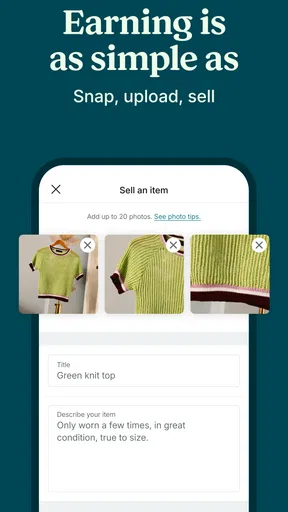
For sellers, the same attention to detail pays off. I would photograph an item in good light, show areas of wear rather than hiding them, and write a description that answers likely questions about condition and fit. Honest detail may make a listing less flashy, but it gives buyers a better basis for deciding and can reduce unnecessary back-and-forth.
What the current version tells me—and what it doesn’t
The current version is 26.41.1, and the app was released on October 10, 2021. That establishes a clear picture of a product that has been available for several years and continues to have a current version. It does not, by itself, tell me which specific features changed over time, so I would not treat a version number as proof of a particular redesign or new tool.
For an existing user, the practical takeaway is to keep the app updated through the relevant app store if they want the current release. I would expect a long-running marketplace to keep refining its experience, but I would judge any change by how it affects ordinary tasks: finding a relevant listing, understanding its condition, managing a sale, and keeping track of a purchase. Those are the moments where usability matters more than a release number.
With a minimum operating-system requirement of 8.0, the app is not limited to only the newest devices. Still, an older phone can make photo browsing and listing preparation less comfortable, particularly if the screen is small or the camera struggles in dim light. If selling is the main goal, taking clear photos and writing a precise description may matter more than having the latest phone, but a device that handles images smoothly makes the process easier.
Where the peer-to-peer model asks for patience
Vinted is not the best choice when I need a guaranteed product specification, identical replacements, or the predictability of buying new from a retailer. A second-hand listing is a one-off offer. The exact colour, size, wear, and presentation can differ, and another buyer may take an item while I am still weighing it up. If I need something by a fixed date or cannot accept variation, a conventional shop is often the calmer option.
There is also more work before checkout. I need to inspect each listing, assess whether the photographs show enough, and decide whether to ask the seller a question. That extra effort is part of the bargain: I get access to individual items, but I also take on more responsibility for judging them. If a listing is vague or its photos leave important details unclear, I would rather move on than assume the item is in better shape than shown.
For sellers, the app can make an unused item visible to interested shoppers, but listing it is not the same as selling it. Good photos, a realistic description, and a price that makes sense for the item all help. I would not rely on a quick sale when planning around a purchase, and I would be prepared to answer reasonable questions rather than treating the app as an automatic way to turn clutter into cash.
A realistic buying and selling routine
Imagine I am looking for a second-hand jumper for everyday wear. I would first decide what matters most—perhaps a comfortable fit and a condition I can accept—then compare listings rather than choosing the first attractive photo. If I find one that looks right, I would read the description carefully and ask about anything important that is not clear. Once it arrives, I would check that it matches the listing before deciding whether the purchase met my expectations.
If I were selling a jumper instead, I would photograph the front, back, label, and any visible wear, then describe the condition plainly. I would keep the item’s limitations visible rather than hoping a buyer misses them. This workflow is a small but meaningful advantage of the marketplace: a thoughtful listing can build confidence without needing professional product photography, while a rushed listing can create doubt even when the item itself is perfectly usable.
This also explains why I would use Vinted differently from a general classifieds app. A broad local listing service may be better when I want to arrange an in-person exchange or sell something outside the marketplace’s typical browsing habits. A new-goods retailer is better when I need standard sizing, a consistent product, or a straightforward repeat purchase. Vinted makes the most sense when the individuality of pre-owned stock is part of the appeal, not an inconvenience.
Who should try it, and who may prefer another route
I would recommend giving it a try if you enjoy hunting for distinctive second-hand finds, want to pass on items you no longer use, or are willing to spend a little time comparing listings. It can suit people who care about extending the life of everyday goods and who are comfortable making decisions from photos and descriptions. The app is free to install, so browsing does not require an upfront purchase.
I would be more cautious if you dislike uncertainty, need a precise item immediately, or find seller-to-buyer communication tiring. Someone shopping for a specific replacement in a standard model may be better served by a conventional retailer. Someone selling a bulky or highly specialized item may find a local marketplace more convenient. The right choice depends less on whether second-hand shopping is appealing in theory and more on whether you are comfortable evaluating individual offers.
Vinted has a substantial community behind it, and the 4.5 average rating reflects broad approval, but a large marketplace is not the same as a guaranteed smooth experience every time. I would use the rating as a sign that many people find the service worthwhile, not as a reason to skip careful checks. The written reviews also show that users have plenty to say about their experiences, though individual outcomes naturally vary.
What I would watch as the app continues to evolve
For current users, the most useful improvements to watch for are the ones that make listings easier to assess and buying or selling less confusing. I would pay attention to whether updates help people compare relevant items, present condition clearly, and keep the steps of a transaction understandable. Those are more meaningful signals than a version number on its own, because they affect the everyday work of using a member-to-member marketplace.
I would also watch how well the experience serves both sides. Buyers need enough detail to judge an item; sellers need a manageable way to present it accurately. If one side gets a smoother experience at the expense of the other, the marketplace becomes less useful overall. That balance is especially important for second-hand goods, where trust comes from the quality of the listing and the clarity of communication rather than a standardized product page.
My overall view is positive, with a practical caveat: Vinted is at its best when you treat every listing as an individual decision, not a guaranteed retail product. It gives second-hand browsing a convenient home and can make both finding and rehoming clothes feel worthwhile. I would recommend it to patient shoppers and careful sellers, while steering anyone who needs certainty or speed toward a more conventional option. The app is worth keeping around if you enjoy the search as much as the purchase.
Pros and cons
Pros
- Buyers can make offers instead of paying the listed price.
- Favorite listings make it easier to keep track of items.
- Bundle purchases can help reduce shipping costs.
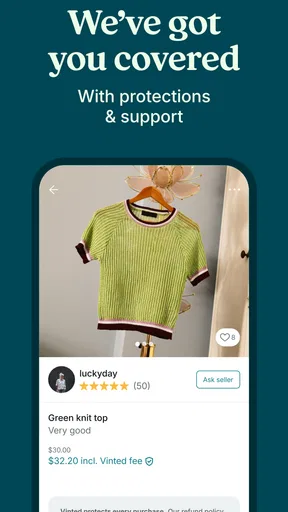
- Seller ratings offer useful context before you buy.
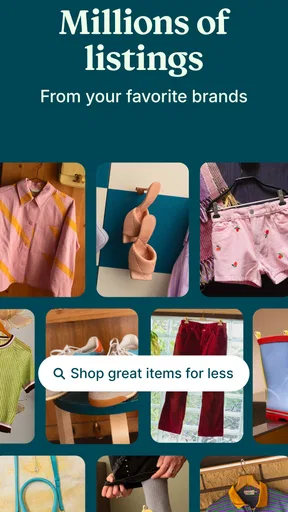
- The catalog includes many clothing sizes and styles.
Cons
- Popular items may sell before you decide to buy.
- Item condition descriptions can vary between sellers.
- Shipping times depend on the seller and delivery service.
- Returns may be difficult when an item does not fit.
- Finding specific items can require repeated searches.


